
Community & Family Support Services
AMHC serves adults with intellectual disabilities and individuals with traumatic brain injury. The agency also supports family relationships and reunification.

Center for Integrated Neuro Rehab

Services available in Aroostook County. Located in Caribou and Houlton, AMHC's Center for Integrated Neuro Rehab (CINR) provides comprehensive brain injury rehabilitation through a day treatment program specifically designed to address deficits that might hinder a brain injury survivor’s optimal recovery, focusing on intellectual, emotional, and social functioning. Fully accredited by CARF, the Commission on Accreditation of Rehabilitation Facilities.
CINR accepts clients 18 years of age and older and welcomes questions about the service as well as direct referrals from individuals and family members; healthcare providers such as hospitals, medical rehabilitation facilities, outpatient facilities, and workers' compensation.
St. John Valley Associates
Originating in 1959 with a pilot class organized by parents and friends, SJVA evolved from a center-based facility in 1978 to focus on community-based activities. In July 2023, SJVA merged with Aroostook Mental Health Services, expanding the organization's dedication to enhancing the lives of individuals with intellectual disabilities.
Services
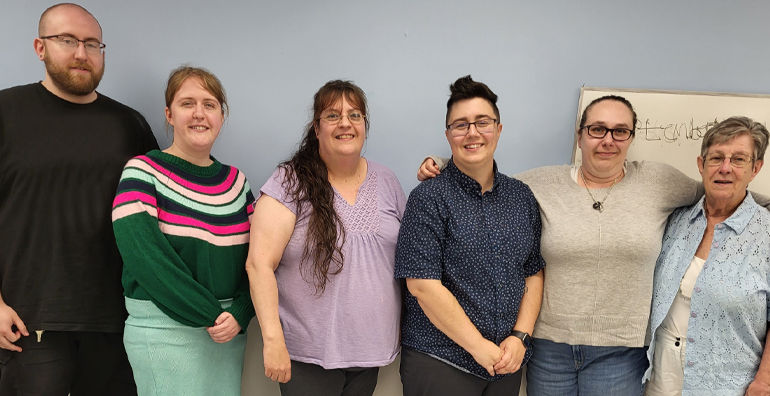
Services available in Aroostook County. St. John Valley Associates (SJVA) is committed to empowering adults with intellectual disabilities by offering a range of daily living skills, including cooking, socialization, physical development, and computer skills. SJVA provides day programming and home support services.
- For more information and referrals, please call 207-728-7197.
Independence Plus
Individuals actively engage in developing independent living skills, encompassing cooking, financial literacy, socialization, physical development, and computer skills. Moreover, there is a strong emphasis on community integration, utilizing local resources, and participating in volunteering activities.
Home Supports
Individuals receive assistance in living independently in their residential settings. Supports may include housekeeping skills, personal care skills, budgeting skills, and accessing the community.
Rights of Maine Citizens with Disabilities
This explanation of recipients' rights, adopted from 34-B MRSA Chapter 186-A, is intended for use by recipients and providers. This law says how other people are supposed to treat you, that you have the right to do certain things, and there are other things that no one can make you do.
Rights of Maine Citizens with Disabilities
This explanation of recipients' rights, adopted from 34-B MRSA Chapter 186-A, is intended for use by recipients and providers. This law says how other people are supposed to treat you, that you have the right to do certain things, and there are other things that no one can make you do.
- No one can tease you or make fun of you. You can tell individuals to leave you alone if they do.
- No one can stop you from going to church or saying prayers if you want to.
- No one can read your mail unless you say it's okay. No one can stop you from mailing a letter.
- No one can stop you from using the telephone, TTY, or fax machines, and no one can listen to your phone calls unless you say it's okay.
- No one can stop other people from coming to visit you, and no one can hang around when you have company unless you say it's okay.
- You must be paid fairly according to existing laws if you have a job. You can ask your caseworker for details.
- No one can stop you from voting, and no one can tell you who to vote for. After you vote, no one can make you tell who you voted for unless you want to tell.
- No one can take away your clothes or money or touch anything unless you say it's okay.
- No one can take away your food to punish or be mean to you.
- No one can stop you from going to the doctor if you do not feel well or to the dentist if your teeth hurt. No one can stop you from asking the doctor to see you if you don't have a way to get to their office. If you want to see a doctor or dentist, ask. No one can make you go to the doctor or dentist if you don't want to go.
- No one can make you take medicine to punish you or to keep you quiet or sleepy.
- No one can stop you from talking to other people.
- No one can stop you from going outside to walk around, going to the movies, or things like that.
- Nobody can hit you or hurt you for doing something wrong.
- No one can hold on to you against your will unless they are sure you are going to hurt yourself or someone else. No one can hold you against your will to punish or be mean to you.
- No one can put you in a bed with bars on it unless it is to protect you from falling out.
- You have a right to see anything that is written about you. All you have to do is ask. No one can show these records to anybody unless you say they can.
- You have the right to get together with the other people you live with and to form a group to make your needs known to those who own and run the place you live and work in.
- Before anyone can put you in an institution, you have to prove to a judge that you need to go to an institution and that an institution is the best and only place for you at the time.
- If you think someone is trying to stop you from doing any of these things or isn't treating you the way they are supposed to, you can tell your caseworker or someone who is your friend to help you make them stop treating you wrong.
- No one can talk about you to others without your permission.
- If you use sign language or gestures to communicate, you have the right to work, live, and relax with others who can sign to you and understand your signs and gestures.
Resources
Family Visitation
Facilitation of supervised and supportive visits with children (in DHHS custody) and their parents or designated individuals. For more information, contact:
- 207-532-6523 (Aroostook)
- 207-498-0289 (Hancock/Washington)
Services are provided in a secure environment, aiming to enhance parent-child interactions and assist parents or designated individuals in refining their parenting skills.
- Aims to facilitate reunification and rehabilitation through supervised interactions.
- Provides a safe environment for enhanced parent-child interactions.
- Opportunities for parents or designated individuals to improve parenting skills through engagement with Visit Support Workers (VSWs)
- Services involve skilled observation and assessment of parent-child interactions.
- Trained VSWs model and teach parenting skills during scheduled visits.
- Parameters for visits are determined through the Family Team Meeting (FTM) process.
- Active participation of VSWs in FTMs and responsive involvement as per department requests.
- Tailored approach aligning with the family's personalized Rehabilitation and Reunification Plan and court directives.
Family Time Coaching
A 16-week evidence-based relational model that supports facilitation between parent and child. Change can be promoted through enhanced parent/child interaction in partnership with a coach/clinical social worker.
Confidential Helplines
Discover essential support services tailored to your needs. From crisis helplines to behavioral health resources and youth assistance, find the guidance you seek. Access confidential and free help today!

988 Helpline
The Lifeline offers 24/7 call, text, and chat access to trained crisis counselors who can help people experiencing suicidal, substance use, and/or mental health crisis, or any other kind of emotional distress.

OPTIONS Maine
Contact your local OPTIONS liaison for guidance on naloxone, Maine's Good Samaritan Law, or suitable substance use disorder (SUD) services for yourself or a loved one.

AMHC Sexual Assault Services
Free, confidential advocacy, education, and prevention services for survivors of sexual violence, available 24/7 by phone, with support from trained counselors.